The impact of slowly rising inventory and decreased demand is starting to add up here on the Outer Banks. Don’t get me wrong, homes in good condition, location and priced right are still selling very quickly. We don’t have an overabundance of inventory, yet. However, we are definitely seeing some markets shifting faster than others.
Here’s how each area breaks down:
| Area | Active Listings | Sold/ Month |
Month Supply |
| Corolla | 161 | 10.6 | 15 |
| Duck | 33 | 3 | 11 |
| S. Shores | 32 | 5 | 6.4 |
| Kitty Hawk | 24 | 7 | 3.4 |
| Kill Devil Hills | 121 | 23 | 5.2 |
| Nags Head | 48 | 10 | 4.8 |
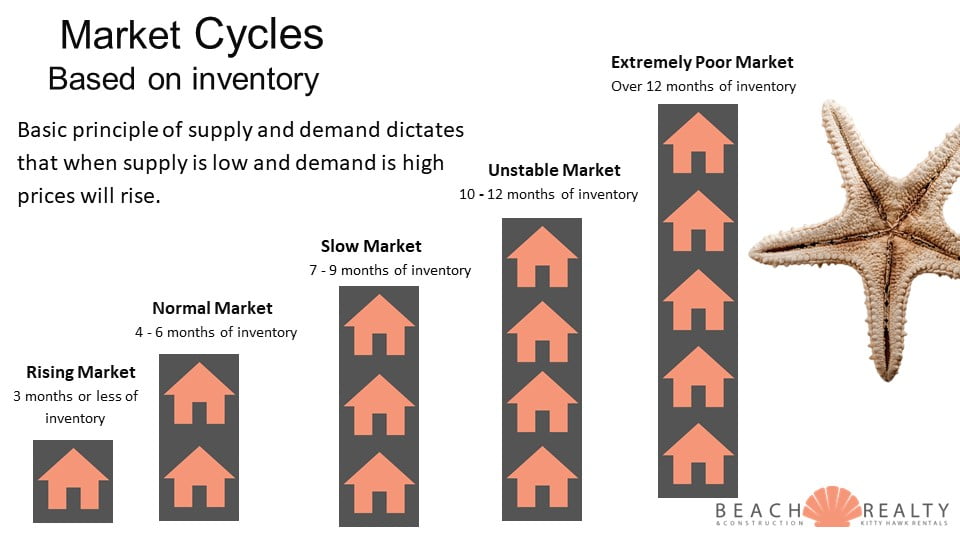
The relationship of inventory to number of homes sold per month gives us the absorption rate. The absorption rate tells us how many months it would take to sell out the inventory at the current rate of sales. That is a direct reflection of the “health” of a market, or describes what type of market we are in. The chart below lists this out. Based on this, you can see how each area is performing.
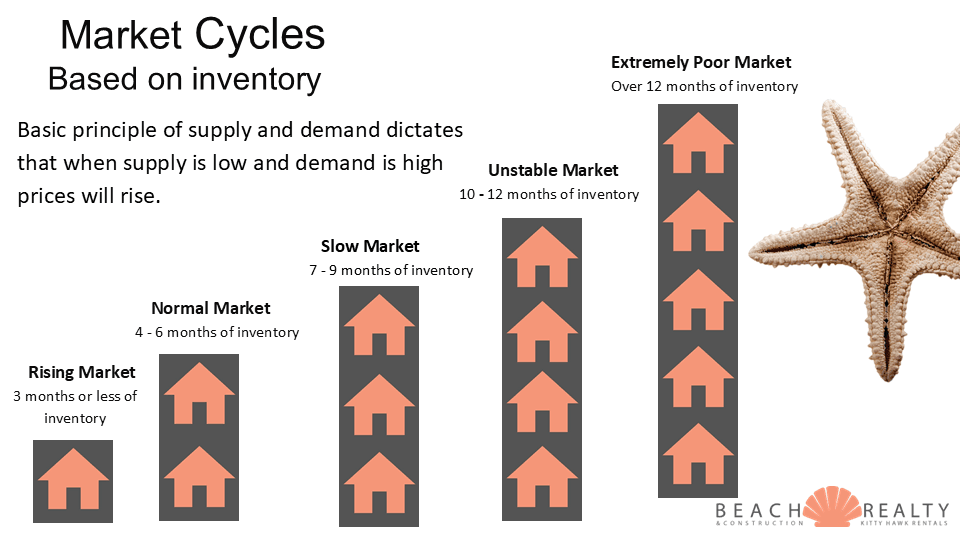
When shifting to a different market it’s common to see some areas performing differently than others. If you consider the higher end markets will generally slow down first, and that is reflected here.
If you are thinking of selling in one of those markets, the time is now.




 In a nutshell, the market here is changing…slowly…but surely. These types of cycle shifts don’t happen all at once. Fortunately, because I study the market every day, I can help you see it coming. After all, you can get out of the way of what you don’t see!
 What a difference a year makes! Long story short, there are some BIG moves that are happening. I’ve talked before about algorithmic decay. This chart here is exactly that! Little, by little, by little, then bang. That’s how markets change. Tale as old as time, song as old as rhyme, it’s almost as good as a crystal ball.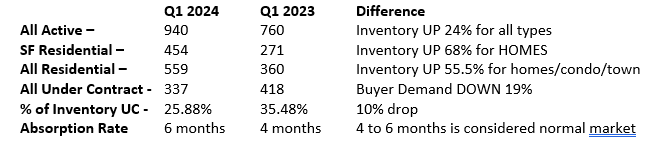
 From what I have been told, there were many meetings amongst lots of organizations, Homebuilders Association and NC Realtors are included in the reshaping of the wastewater regulations. Negotiations were settled, the meeting concluded, and everyone went home. The night before the vote, the bill is sent out. Unbeknownst to all signings, changes were made in favor of the Septic Tank Association’s lobbyists, resulting in the incoming “shituation” we have now. This DID come from the private sector and the only way out of it is legislatively.
 With all the insurance and septic news, I’m going to be brief on this month’s market report and just give you the numbers straight up. With only one month in, there isn’t a lot to analyze anyway.